BRATISLAVA / CULTURE AND COMMUNITY
Gay Bratislava after Tepláreň, and how the city keeps making room
Gay Bratislava is not contained in one district. Counselling, cabaret, film, public protest and ordinary afternoons form a network that has outlived the loss of any single venue, Tepláreň included.

BEYOND THE MARCH
Pride made refusal visible for one Saturday. The more revealing story is what happens during the rest of the year.
Courage had a precise meaning
On 18 July 2026, roughly 10,000 people walked through Bratislava for Dúhový PRIDE, according to the organisers. They gathered on Námestie slobody, Freedom Square, beside the Government Office, then marched along a route that had not been announced in advance for security reasons. The procession passed the former Tepláreň bar, where Juraj Vankulič and Matúš Horváth were murdered in an anti-LGBTI+ terrorist attack in October 2022.
The 2026 Pride theme was courage. In Bratislava, that word carried particular weight. It meant being visible in a country that had recently written new restrictions affecting LGBTI+ people into its constitution. It meant returning to a street marked by violence. It also meant refusing the idea that queer public life should exist only behind a closed door.
A network, not a postcode
Anyone looking for gay Bratislava on a tourist map will not find a district to circle. The city’s queer life is spread across community rooms, independent cultural venues, temporary club nights, theatres, cinemas and organisations. Some projects have permanent addresses. Others move between venues or appear for a single evening.
This makes the scene less obvious to a casual visitor, but it also explains its character. Queer Bratislava has been built through cooperation rather than concentration. A counselling centre may host a discussion. A performance space may give its stage to queer artists. A party can become a platform for cabaret, drag and community fundraising. A film festival can carry stories into cities where there is little permanent LGBTI+ infrastructure.
The city’s queer life is therefore best understood as a network. Its strength does not come from the number of venues displaying a rainbow flag. It comes from people maintaining places where others can meet, ask for help, make art or simply spend an afternoon without having to explain themselves.
What remained after the bar closed
The Tepláreň bar operated on Zámocká Street from 2015 until 2023, but the project had begun earlier as a series of queer parties and community events. After the 2022 attack and the later closure of the bar, Tepláreň did not disappear. It changed form.
Queer Slovakia now continues the project through Tepláreň Kabaret & Party and the discussion series Tepláreň naživo. The cabaret combines drag, burlesque, music and performance, usually at Šafko club and occasionally at festivals elsewhere. The discussions take on everyday LGBTI+ experience, history, culture and rights. After travelling through different Bratislava venues in 2024, Tepláreň naživo found a regular base at the community centre In in 2025.
That continuity matters. It does not erase what happened on Zámocká Street, and it should never be used to turn loss into an easy story of triumph. It shows something more practical: a community project can survive the loss of its building when organisers, artists and audiences keep carrying its work forward.
The value of an ordinary Wednesday
Iniciatíva Inakosť opened the community and integration centre In on 27 February 2025. It provides psychological, legal and social counselling alongside cultural programmes, meetings and peer support. Inakosť reported at the opening that demand for psychological assistance had doubled over the previous year, while requests for legal and social help had also risen sharply.
Those figures place the centre in a different category from a nightlife venue. The In centre is designed for the hours when someone needs a conversation, professional advice or a room where arriving alone does not feel unusual.
One of its simplest recurring programmes is Open Wednesday. People can work, read, play games, talk or have coffee in the centre. Nothing spectacular has to happen. That is precisely the point. Public visibility is important, but a community also needs low-pressure places where presence is ordinary.
The centre hosts theatre, workshops, youth programmes, social evenings and the Tepláreň naživo discussions. Its address at Záhradnícka 1 gives several strands of Bratislava’s queer life a shared home: advocacy, care, education and culture.
Culture does work that politics will not
Bratislava’s independent cultural scene has become another form of queer infrastructure.
P*AKT, an independent centre for performance, music and visual art on Pionierska Street, explicitly provides space for LGBTI+ artists and creators from other marginalised communities. Its 2026 programme included queer visual art and performances, as well as work by Divadlo NOMANTINELS.
NOMANTINELS has spent years bringing Slovak queer history and contemporary experience to the stage. Its productions have examined life under state socialism, hidden meeting places, intimacy, fear and the meaning of safety after the Tepláreň attack. These are not decorative additions to a city’s cultural calendar. They give an audience language for experiences that political debate often reduces to slogans.
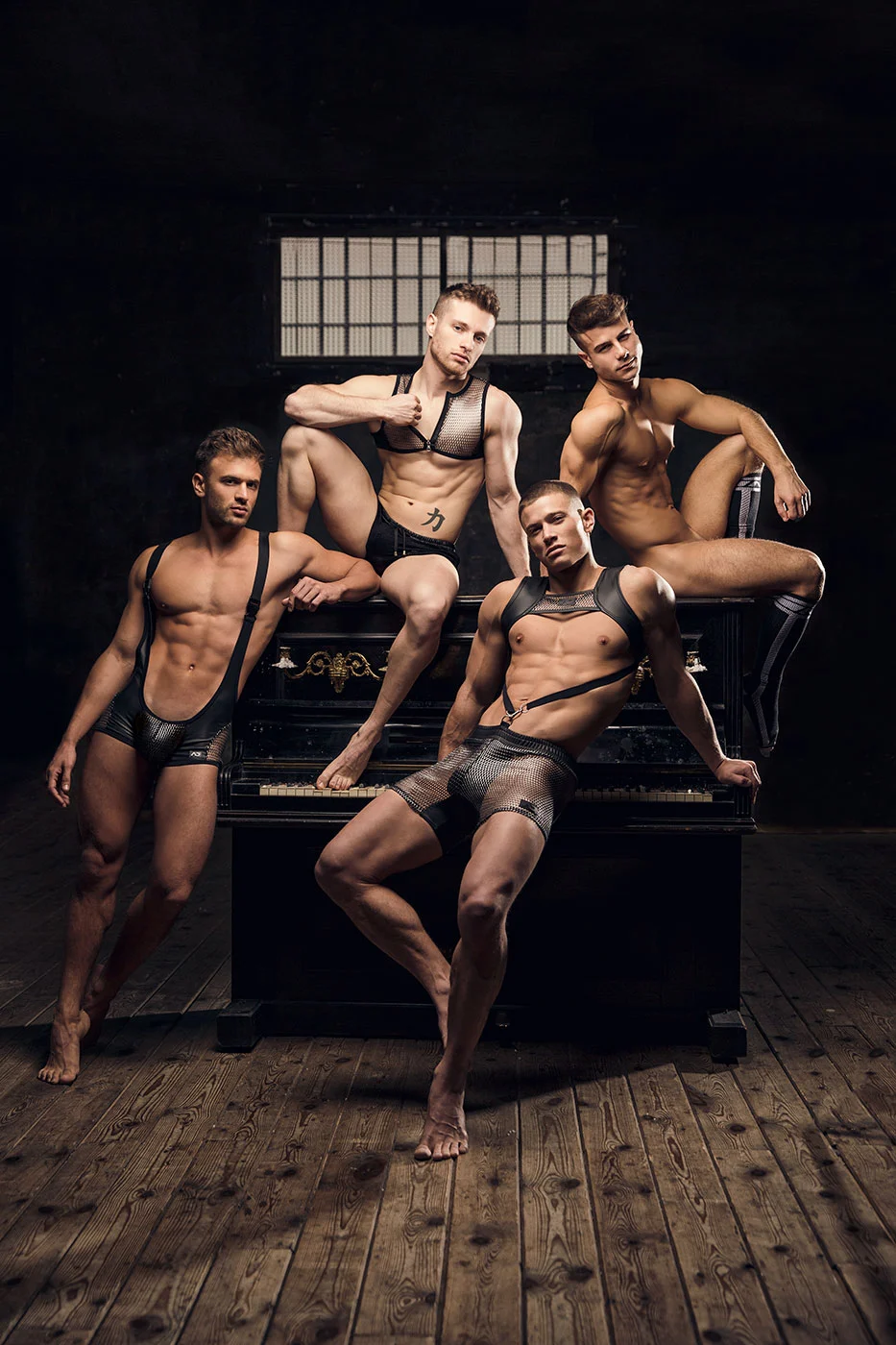
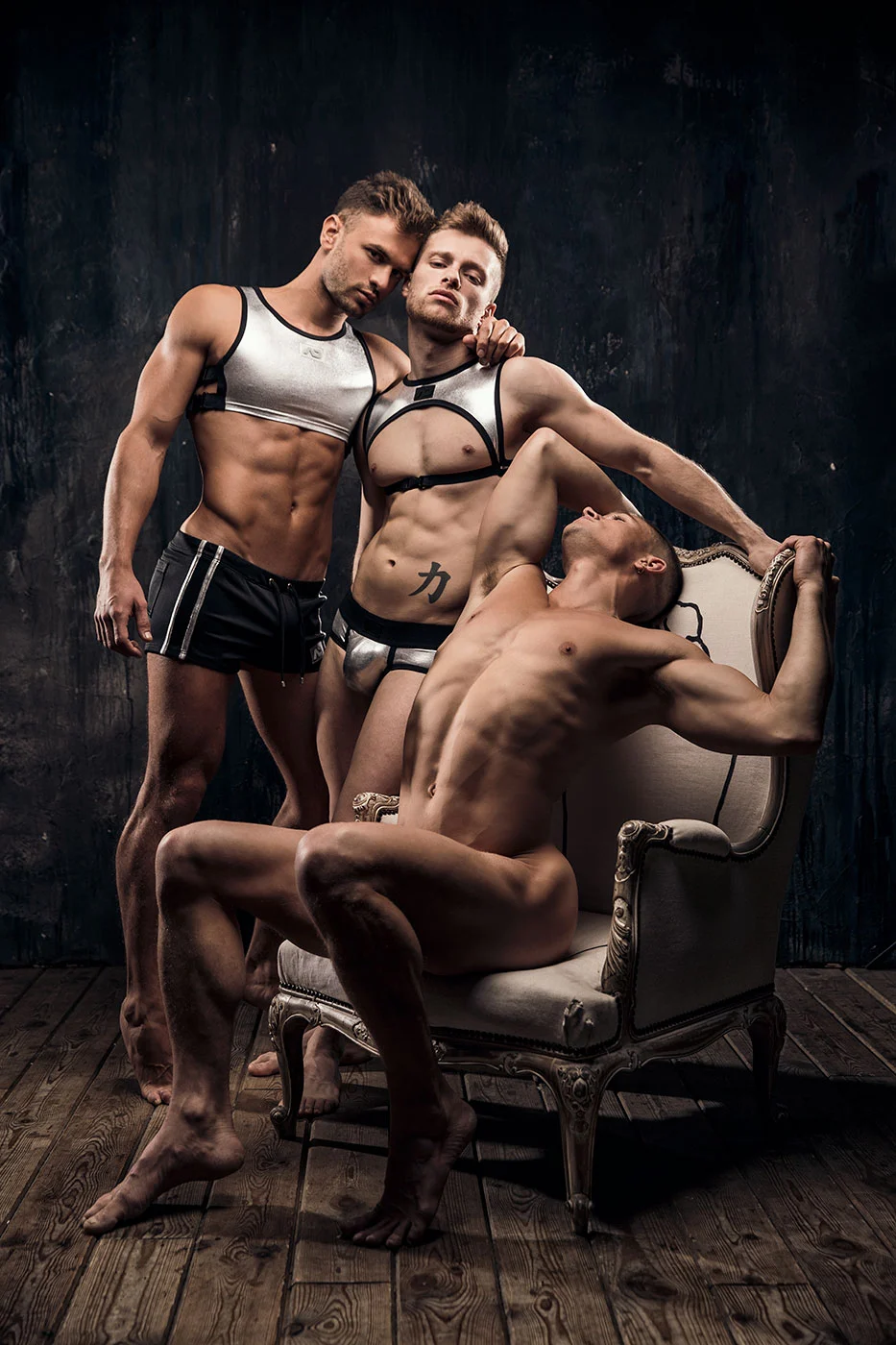
The Slovak Queer Film Festival, organised annually by Iniciatíva Inakosť since 2007, performs a related role through cinema. Queer Slovakia’s cabaret and party nights occupy another register: louder, more playful and built around performance, dancing and the pleasure of being together. They are nights made for dressing up, for glitter and sequins and for the mesh tops and harnesses of the ADDICTED Party collection.
A liberal city inside a restrictive state
Bratislava can feel markedly different from the national political mood. It hosts Pride, queer theatre, film, exhibitions and public discussions. The city and Bratislava–Old Town are listed as partners of the In community centre. Yet the parliament sitting in the same city approved constitutional amendments in September 2025. They formally recognised only two sexes, restricted adoption to married heterosexual couples and challenged the primacy of European Union law in questions labelled matters of national identity.
ILGA-Europe’s 2026 Rainbow Map gave Slovakia 25 per cent and placed it 35th among 49 European countries. Same-sex couples still lack domestic legal recognition, while the amendments made legal gender recognition impossible.
This is the tension visitors encounter. Bratislava contains genuine spaces of freedom, but those spaces do not cancel the country’s legal reality. Nor does national hostility make the city’s cultural life unreal. Both exist at once.
The city keeps reopening the room
Queer Bratislava is not a finished success story. Its organisations repeatedly warn about unstable funding. Independent venues depend on audiences, donors and project support. Cultural workers are expected to create art while also defending the conditions that allow them to work. Community centres must plan for tomorrow while responding to people who need help today.
Still, the city has developed something durable: a habit of rebuilding connection.
A bar closed, but its discussions continued. A tragedy entered the city’s memory, but it did not become the community’s only story. Pride remained a protest while expanding into weeks of theatre, workshops, youth meetings and social programmes. A new centre opened where people can seek counselling or simply sit down with a coffee.
That is the clearest way to read queer Bratislava in 2026. Its public life is not concentrated in one neighbourhood or guaranteed by law. It is made visible, room by room, by people who continue to open the door.
The city is a network.
Bratislava’s queer life is sustained by people who connect care, culture and public visibility across different rooms. No single venue carries the whole story.
Bratislava Pride 2026 and the wider scene in queer Slovakia →