KOŠICE / EASTERN SLOVAKIA
Košice Pride 2026 and the people building a year-round community
Pride brings the flags out once a year. Saplinq, PRIZMA and Ponq tell the deeper story of queer Košice: counselling, friendship, culture and organising, with a permanent address in eastern Slovakia.

THE WORK BETWEEN PRIDES
Košice has built something quieter and more consequential than a list of bars.
A queer story rooted in the east
Košice does not have a gay district, and its queer life cannot be reduced to nightlife. What the city has built is quieter, more practical and, in the present Slovak climate, more consequential: a network that helps people meet, find professional support, make art and organise for their rights without travelling across the country to Bratislava.
That network has grown around Saplinq, the civic association founded in Košice in 2012. Its projects now include PRIDE Košice, the PRIZMA community and counselling centre, and Ponq, a café and cultural venue that opened in the Old Town in 2025. Together they tell a distinctly local story. Košice has developed its own way of making queer life visible: through community work that continues all year, then takes to the streets once summer arrives.
A Pride backed by thirteen years of work
The first PRIDE Košice took place in 2013, a year after Saplinq was established. From the start, the march retained Pride’s political purpose: queer people making themselves visible in public and demanding equal treatment. It grew into a festival combining the march with discussions, workshops, exhibitions and performances.
The 2026 programme, under the theme IM/PULZ, spanned a long weekend from 21 to 23 August. It opened on Friday at Ponq with banner-making for the march, speed-friending and a show and karaoke night with the House of Elisabeth. Saturday 22 August, the Pride day itself, was held at Tabačka Kulturfabrik, with talks, a living library, live music, the QueerTime show and DJs into the small hours. Sunday began with a morning run from the floating fountain in the city park.
Organisers had said in advance that this year would be more modest. Saplinq director Róbert Furiel told the Slovak publication Dúhový rok that preparations were taking place under difficult conditions and that several decisions had to be changed at short notice. The pressure was financial as well as political. Saplinq waited 18 months for the first payment from a European grant administered through Slovakia’s National Institute for Education and Youth, and the money arrived on 12 June 2026, after the European Commission had warned Slovakia against discriminatory practices.
The previous Pride had already gone ahead without support from the Slovak Arts Council. A smaller production does not mean the local community has run out of ideas. It shows how much cultural and social work can depend on a small team’s ability to keep going when public funding becomes unreliable.

The national climate reaches Hlavná Street
In ILGA-Europe’s 2026 Rainbow Map, Slovakia placed 35th among 49 European countries, with a score of 25 per cent for its laws and policies affecting LGBTI people. The country fell two places after constitutional changes adopted in 2025 recognised only two sexes and further restricted adoption. Slovakia still has no domestic legal framework for same-sex partnerships.
Those decisions are made in Bratislava, but their consequences are not confined to parliament. They shape conversations with families, the uncertainty trans people face around documents and healthcare, and the calculation involved in being visibly queer at school, at work or in public.
A city-level scene cannot legislate those problems away. What it can offer is company, so that nobody has to face them alone. That is where the everyday work in Košice becomes more important than any vague claim that the city is simply welcoming.
Where support becomes concrete
PRIZMA is Saplinq’s community and counselling centre for LGBTI+ people in Košice and the surrounding region. It offers counselling that responds to the needs of queer, trans and non-binary people, alongside support groups and community meetings. Its current programme includes regular meetings in Slovak and sessions held in English, giving people who are new to the city another way in.
This is not the glamorous side of queer culture, but it may be the part with the greatest effect on someone’s life. A person considering coming out can speak to someone who understands the local setting. A parent looking for reliable information does not have to rely on political television debates. Someone who feels isolated can enter a room where their identity is not the first thing they must defend.
PRIZMA’s importance reaches beyond Košice. Saplinq describes it as the only counselling centre of its kind serving LGBTI+ people and their relatives in eastern Slovakia, while enquiries come from across the country. In a region where specialist support is scarce, a service based in Košice can be the closest credible option for people living many towns away.
Another kind of room
Ponq opened on Hrnčiarska Street in August 2025, close to Hlavná Street and the railway station. It occupies a former gallery and carpenter’s house; its name refers to the Slovak word ponk, a carpenter’s workbench, with a Q added to signal its contemporary identity.
It is a café, bar and cultural centre rather than a counselling service. You can go there for coffee or a local beer, see an exhibition, take part in a workshop or meet someone without needing a formal reason. That ordinary ease is what makes the place significant. Queer space does not always need a stage or a late-night door policy. Sometimes it needs a table where people can stay without explaining why they came.
Ponq also connects hospitality to the work around it: profits from the venue support Saplinq’s activities, particularly PRIZMA. The arrangement is an attempt to create income that is less exposed to delayed grants and changing political priorities. It is also a practical link between public culture and less visible care.
The venue’s first Pride season offered a glimpse of what that can look like. The 2025 festival opened there with speed-friending, an open mic and a performance by members of the House of Elisabeth. The wider programme brought together drag, slam poetry, discussions and workshops across Ponq, Kulturpark and Tabačka Kulturfabrik.
A scene made from relationships, not recommendations
People searching for queer Košice often encounter generic travel pages promising gay-friendly venues. Those lists age quickly, and friendliness is difficult to verify from a distance. A more useful question is who is doing sustained work in the city and where their current information can be found.
Saplinq, PRIZMA, Ponq and PRIDE Košice provide that starting point. Their roles are different: one organises and advocates, one offers support, one hosts everyday cultural life and one makes equality visible in the city. Together they form something more durable than a weekend itinerary.
Visitors are part of that picture too. Pride is not local colour staged for an audience, and Ponq is not a curiosity to photograph and leave. These spaces exist first for the people whose work created them. The guests who belong there treat them as community venues, come for what is on, buy a coffee or a beer and know that safety is not shared equally by everyone in the room.
What the march carries
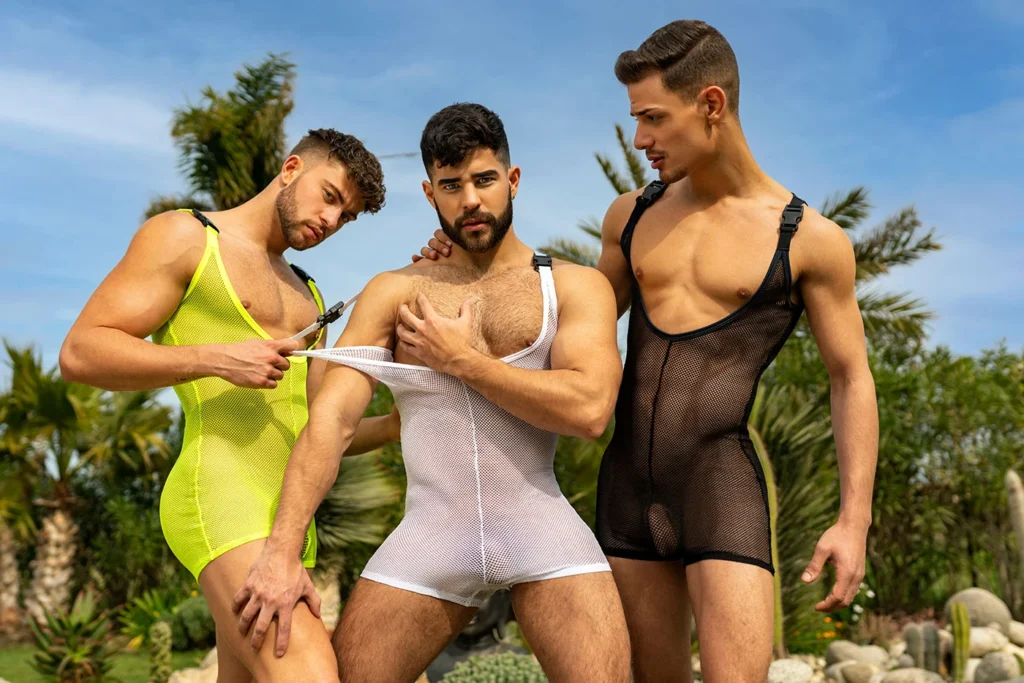
On the eve of the Pride day, the organisers’ safety notice strongly advised participants not to wear rainbow symbols outside the festival grounds and the march. That single line says more about the national mood than any ranking. Inside the festival the rainbow is the whole point, whether it comes on a hand-painted banner, a flag or a rainbow tank top from the ADDICTED Pride collection.
The march is backed by thirteen years of public presence and by the slower work that rarely makes a headline: a support-group meeting, a legal consultation, an art workshop, a coffee shared with someone who has just arrived in the city. That is what sets queer Košice apart. Pride does not create the community for one day. The community creates Pride and keeps working when the day is over.
The community creates Pride.
Košice’s strongest story is the year-round relationship between counselling, culture and organising. The march is the public expression of work that does not stop when summer ends.