ZAGREB / CULTURE AND COMMUNITY
Gay Zagreb after the march
Zagreb Pride changed who could be seen in the city’s streets. Gay Zagreb, though, is built between marches, in support rooms, cinemas, archives, rehearsal spaces and ordinary days lived without asking permission.

THE CITY BETWEEN MARCHES
The crowd tells one story. A legal-support call, a film screening and a saved protest flyer tell the rest.
The procession and the ordinary day
There are two ways to read Zagreb in early summer. One is through the crowd: banners crossing the centre, music moving between the façades and thousands of people claiming the streets as their own. The other begins after the sound system stops. It is found in a legal-support call, a film screening, a rehearsal, a family meeting, an old protest flyer saved rather than thrown away. Together, those views explain the city better than either can alone.
Zagreb held Croatia’s first Pride march on 29 June 2002. Around 300 people took part; Zagreb Pride’s own history records that 30 people were physically attacked before or after the march. In 2026, the city marked the twenty-fifth edition. The distance is considerable, but not a neat journey from danger to acceptance.
Public visibility has grown because people kept organising when visibility still carried a cost. Zagreb does not become queer for a weekend in June. The work continues through the rest of the calendar, sometimes on a public stage and sometimes far from it.
A march that began under pressure
The first march was called “Gay Pride Zagreb – Iskorak KONTRA predrasuda”, meaning “coming out against prejudice”, a title that also carried the names of Iskorak and Kontra, the organisations whose members formed its organising committee. The event drew strong media attention and political support, but participants still faced violence in the surrounding streets.
The following year brought the name Zagreb Pride and a more independent organising model. Its autonomous committee widened participation beyond the original organisations, giving more of the community a hand in how the march would speak and what it would demand.
The current organiser, Udruga Zagreb Pride, describes itself as queer-feminist and anti-fascist. Its work extends well beyond the march into advocacy, research, publishing, community work and legal support for people who experience discrimination or hate crime.
On 6 June 2026, the association led the twenty-fifth march under the slogan “Korak po korak, iskorak!”, meaning “step by step, a step forward”. Its proclamation looked back on years of resistance and put the history in one line: every step had been a step forward towards a better society. Zagreb’s progress has arrived through accumulation, not a single breakthrough.
When city policy catches up with city life
The relationship between Zagreb’s queer community and its municipal government has changed markedly since 2002. In December 2024, the City Assembly adopted Zagreb’s first dedicated programme for the equality of LGBTIQ+ people, running to the end of 2026. The plan covers protection from discrimination and violence, health, social care, education, culture and civil society.
Policies are not the same as lived equality, but they reveal what a city is prepared to recognise as its responsibility. In 2025, Zagreb formalised cooperation with Zagreb Pride, Rainbow Families Croatia, Iskorak and Domino for activities under the programme. Some symbols are older than the programme. Zagreb Pride has flown rainbow flags on Ban Jelačić Square, with the consent of every city administration, since 2007, and the City has raised them on its own flagpoles around 17 May since 2016. The activists came first; the institution followed.
This is the tension at the heart of contemporary Zagreb. The city government can stand beside the march, and in June 2026 the mayor, Tomislav Tomašević, walked in it. It can fund community projects and put equality into an official programme. Queer residents can still meet hostility, discrimination or a sharp calculation about where it feels safe to hold a partner’s hand.
Zagreb is therefore neither a cautionary tale nor a finished success story. It is a city in which public institutions have begun to acknowledge work the community had been doing for decades. It matters just as much to ask what remains when a programme reaches its end date.
Culture is not decoration
Queer life in Zagreb has also been built through art that is often experimental, argumentative and deliberately difficult to file under entertainment alone. Domino’s Queer Zagreb Season is central to that history. Established in the early 2000s and developed into a year-round interdisciplinary programme, it has brought performance, dance, film, literature, visual art and public discussion into different parts of the city.
Queer culture here does not wait for Pride Month or depend on one permanent address. A performance may appear in a theatre, cultural centre or independent space; an international artist enters a conversation already shaped by local work. The 24th Queer Zagreb Season ran from 2 to 30 May 2026 with trans artistic voices at its centre. From 26 May to 7 June, the Zagreb City Museum showed seventy pieces from the Archivo de la Memoria Trans, the trans memory archive from Buenos Aires.
Queer MoMents, Domino’s recurring film programme at Zagreb’s Cultural Information Centre, gives cinema a particular role in that ecology. Film creates a room in which desire, family, violence, humour and political memory can be watched together and discussed in public.
Performance does something similar with the body. In a city where queer bodies once entered the main streets under police protection and threat of attack, putting those bodies at the centre of a stage carries its own history.

A city keeps what the community refuses to lose
Zagreb Pride collects flyers, posters, photographs, video recordings and publications in an archive and reading room dedicated to the movement in Croatia. The collection turns objects made for immediate use, a leaflet handed out at a protest or a poster taped to a wall, into evidence of how language, demands and public confidence changed over time.
Domino has contributed to that work through oral history. Its published history of homosexuality in Croatia recorded private and public lives from before the emergence of the contemporary LGBTQ movement and Pride. The digital Queer Archive project has pursued a related idea through interviews, photographs, audio and video: people should be able to place their own memories into the historical record rather than remain subjects described only by institutions or hostile media.
Queer Zagreb did not begin when an event acquired a logo or when the municipality adopted a policy. It existed in apartments, friendships, cultural work and lives that were not always safe to name publicly. The archive joins those histories to the politics of the street. Laws establish rights; archives show what people did before those rights existed, and what they continued to do afterwards.
Care makes a scene into a community
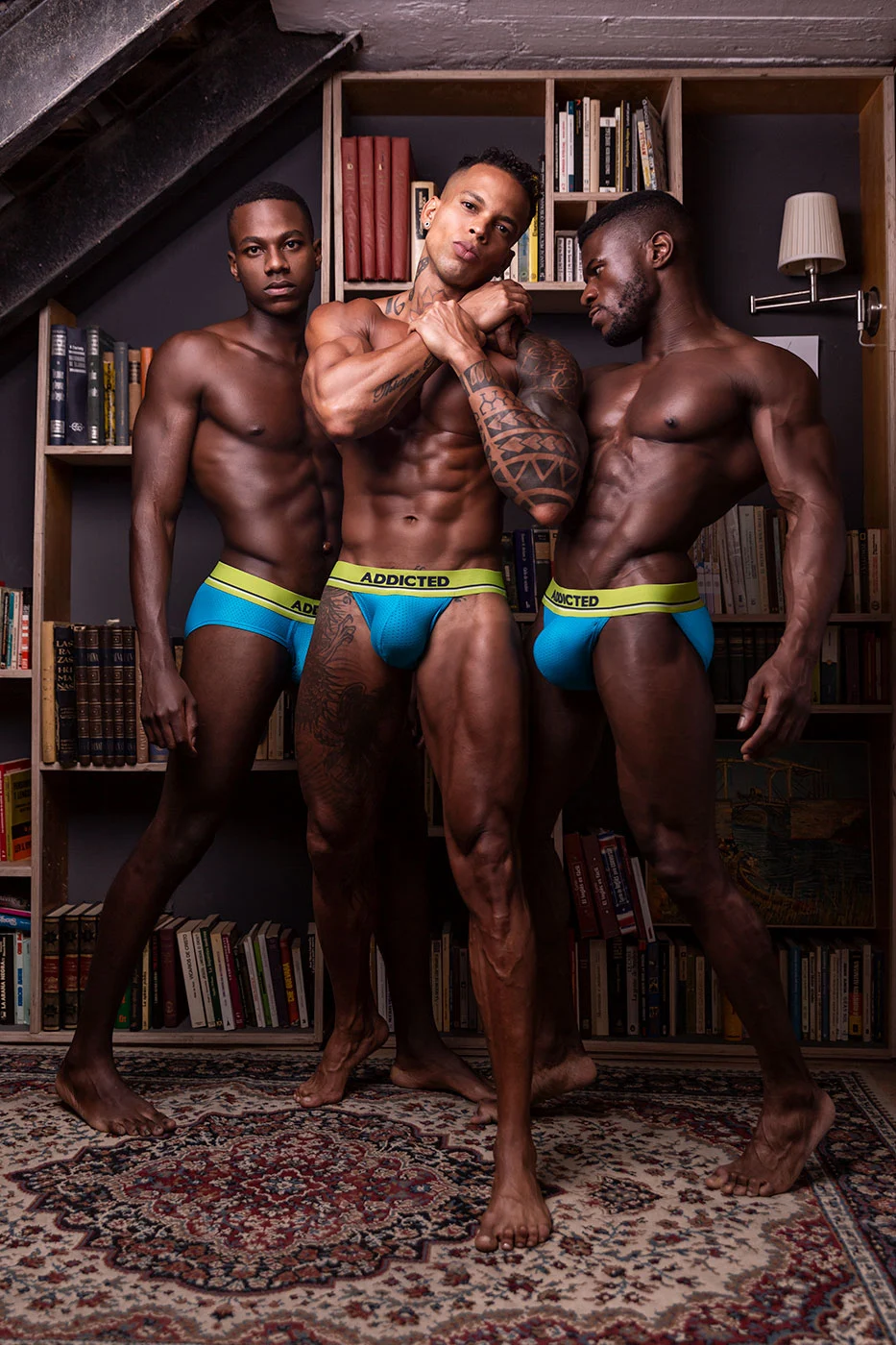
Nightlife and public celebration are real parts of queer urban life, and gay Zagreb has its club nights, the kind that call for mesh, a little shine or a harness from the ADDICTED Party collection. On their own, though, they are not enough to sustain a community. Zagreb’s organisations fill the spaces where visibility alone offers little help.
Iskorak works with LGBTI+ people and people living with HIV, providing services that include voluntary anonymous testing and psychological support. Rainbow Families Croatia advocates for LGBTIQ+ parents, prospective parents and their children, while also creating spaces for information, education and conversation. Zagreb Pride operates its Pink Megaphone reporting and support channel for violence and discrimination, alongside legal assistance and community work.
These services rarely produce the city’s most recognisable images. They do something more fundamental: they allow someone to ask a question before it becomes a crisis, report harm without surrendering privacy, meet another family that does not need an explanation, or find support after rejection. They are how a public scene acquires continuity and care.
The organisations are distinct, and their politics, priorities and audiences are not interchangeable. That plurality is one of Zagreb’s strengths. A community does not need a single authorised voice. It needs different forms of expertise, disagreement, access and belonging.
The ordinary freedom after visibility
The most persuasive sign of queer Zagreb is not one crowd, institution or venue. It is the relationship between them. The march puts demands into the street. Advocacy carries them into law and city policy. Support organisations deal with the consequences when rights fail in daily life. Artists test the language available for bodies and desire. Archives keep the struggle from being rewritten as if it never happened.
Zagreb’s queer character is not best understood through a list of bars or a single date in June. It is present in the city’s cultural calendar, in the organisations whose work continues on quiet afternoons, and in a history that residents have insisted on preserving. It shows on ordinary evenings, at a performance in May, a film night at the Cultural Information Centre or a talk that runs late.
Twenty-five marches have changed Zagreb. The deeper achievement is that queer life no longer has to wait for the march to become visible. Queer people can take the stage, enter the archive, form a family, seek care and argue with city hall. The city remains unfinished. That is precisely why its queer life belongs to the whole year.
Pride changed the street. Community changed the calendar.
Queer Zagreb is not a venue list or one summer crowd. It is the connection between public protest, care, culture, family life and a history the community chose to preserve.