ORADEA PRIDE 2026 / 25 JULY
Oradea Pride 2026 marched after the city said no
Before the procession had moved a metre, officers were already issuing fines. What followed was not a portrait of all Romania, but a sharp example of how differently the right to be visible can work from one city to another.

THE AFTERNOON
A warning came through a loudspeaker outside City Hall. Those who stayed could be sanctioned. Then officers began writing fines before the procession had set off.
The crowd answered with music
At four o’clock on Saturday afternoon, the first confrontation was still measured in words. A gendarme’s loudspeaker told the people gathering outside Oradea City Hall that the assembly had not been approved. Those who remained, the warning continued, could be sanctioned. When the first fines were written, the crowd answered by singing.
At about five, the march set off through the centre along Strada Independenței, Piața 1 Decembrie and Strada General Traian Moșoiu, then back to Piața Unirii, with gendarmes on both sides of a procession the municipality had refused to accommodate. By about twenty to six it was over.
Hundreds of people took part. The local newspaper Bihoreanul counted more than 200 in the march at around half past five; the organisers told El País 700. By the end of the day, the Bihor Gendarmerie said the unapproved gathering had ended without incident. It had also issued 55 administrative sanctions worth a combined 61,500 lei.
That pairing of no violence and dozens of fines tells the story more accurately than any sweeping claim about Romania could.
More than one hundred routes, no accepted path
ARK Oradea announced the fourth edition of the city’s Pride festival on 22 April. Its theme, “Oradea belongs to everyone”, was deliberately local. The programme was built around debates, films, exhibitions and workshops, with the march scheduled for 25 July.
ARK was founded in 2023 and describes itself as the first NGO in Oradea dedicated to the rights and dignity of LGBTQIA+ people. Its attempts to use public space repeatedly met administrative resistance. A proposed Pride Park was refused in 2024. In 2025, every route submitted for a march was rejected, and more than 500 people walked anyway in what ARK calls the first Pride march held in Oradea. That December, ACCEPT and ARK took the refusals to the European Court of Human Rights.
For 2026, the organisers filed their declaration at what they described as the earliest moment permitted by law and proposed more than 100 possible routes. The final municipal decision referred to 115. No adjusted route emerged.

Roadworks can be mapped. “Good morals” cannot.
Romania’s public-assembly law, Law 60 of 1991, uses a prior-declaration system and gives local authorities defined grounds for prohibiting a gathering. It also allows the commission and organisers to adjust the plan by agreement.
On 22 July, three days before the march, City Hall said all 115 proposals were concentrated around central streets, parks and squares, and that each conflicted with previously accepted events or major works.
The written order went further. As reported by Digi24, HotNews and Bihoreanul, the mayor’s decision also referred to complaints claiming that the march would breach standards of social conduct and “good morals”.
That phrase changed the argument. Roadworks can be located. Two events cannot occupy the same street at the same time. “Good morals”, when attached to a peaceful LGBTQIA+ march, is not a traffic-management explanation.
ARK Oradea and ACCEPT described the decision as direct discrimination and announced that the march would proceed. They chose the square outside City Hall as the meeting point.
A local march became a test of public space
On 16 July, Peter Drenth, the Council of Europe Congress’s standing rapporteur on human rights, called on the authorities to find appropriate security arrangements and allow the march to proceed. He noted that this was the fourth consecutive year in which Oradea Pride had faced serious obstacles.
A joint solidarity statement brought together more than 125 civil-society organisations, including ILGA-Europe, the European Pride Organisers Association, IGLYO, OII Europe and Romanian groups. Romania’s Ombudsperson, Renate Weber, attended events in Oradea on the day of the march and argued that constitutional protection for peaceful assembly could not be dismissed by the mayor’s reading of the law. The Dutch ambassador, Willemijn van Haaften, came to support the marchers in person, and the mayors of Paris and Budapest sent messages of solidarity.
The attention did not turn the march into a vast international spectacle. It remained visibly local: a few hundred people walking through their own city, surrounded by an unusually heavy security presence. One chant could only have come from Oradea. It mocked a city with so many colourful buildings for being frightened of a rainbow.

Bucharest and Oradea show two different realities
Six weeks earlier, on 13 June, Bucharest Pride had brought about 35,000 people onto Calea Victoriei, by the organisers’ count. Pride events have also become established in several other Romanian cities. Oradea is not shorthand for the whole country, and its mayor’s decision is not the opinion of every resident.
The contrast is the point. Romania can fill a central boulevard of its capital for Pride while a community in the west must contest every metre of its route. National visibility has grown faster than equal treatment between cities.
The wider legal picture helps explain why a municipal confrontation can carry so much weight. Romania still offers no general legal recognition for same-sex couples. In 2023, the European Court of Human Rights ruled that the absence of any framework recognising and protecting those relationships breached the right to private and family life.
Three years later, ILGA-Europe placed Romania at the bottom of the EU in its legal and policy ranking. That does not measure the warmth of every neighbourhood or the courage of every local community. It shows the institutional environment in which a phrase such as “good morals” lands.
The route appeared only after people began walking it
Oradea Pride 2026 was not a simple story of celebration overcoming opposition. Participants were warned, fined and then escorted through streets where the authorities had said no suitable path was available. The procession remained peaceful.
On 27 July, after the event had taken place, City Hall sent a fuller response to Bihoreanul. The newspaper said the explanation still did not show how each proposal had been assessed or why no lawful alternative had been found. The unanswered question was no longer whether a route existed. The marchers had just walked one.
This does not prove that Pride is impossible in Romania. Bucharest’s June march makes that claim untenable. It proves something more specific: freedoms that appear established in one Romanian city can still become conditional in another.
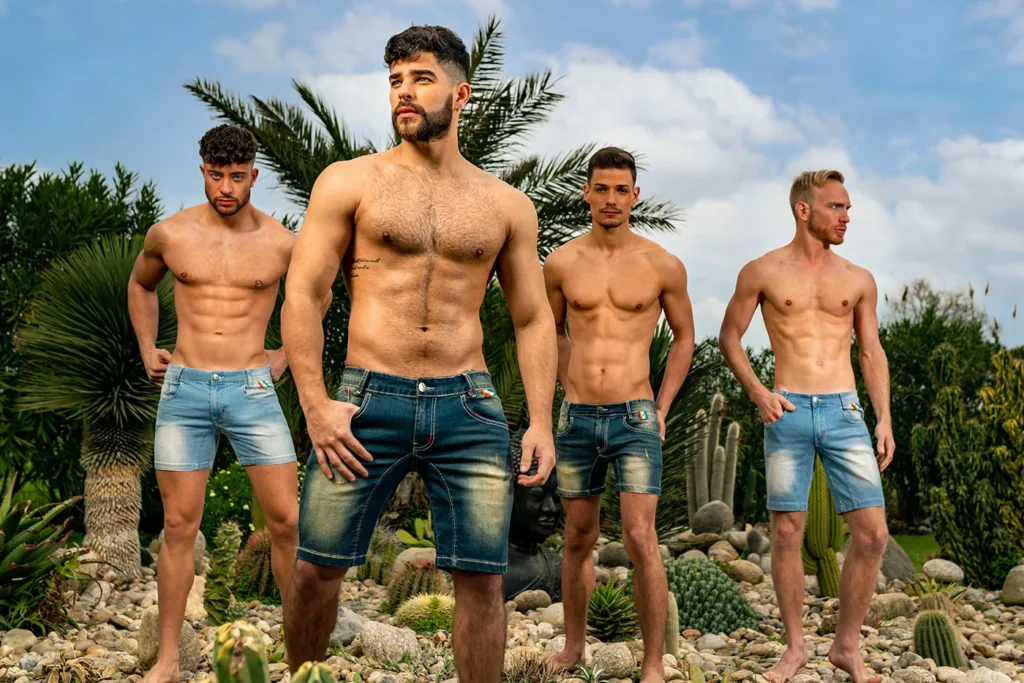
On 25 July, Oradea Pride did not ask to represent the whole country. It asked to be visible in its own city. Being seen is what every Pride has in common, from a square in Oradea to Calea Victoriei, and it is the idea the ADDICTED Pride collection is built on.
A local route. A national question.
Oradea Pride 2026 went ahead peacefully after every proposed route was refused. The day showed how far public visibility can differ between Romanian cities.